• Skip to main content

  • HOME
  • ARTISTS
  • CONTACT
  • WHAT’S NEW
  • Exhibitions
  • SEARCH

Artists

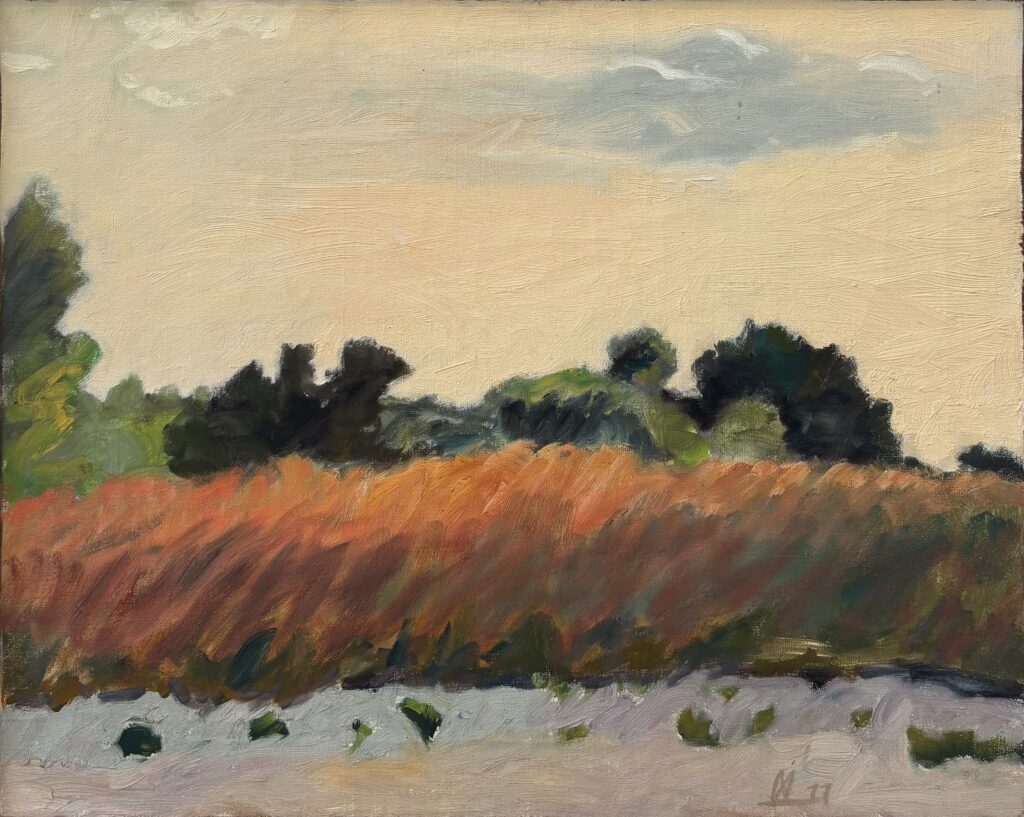
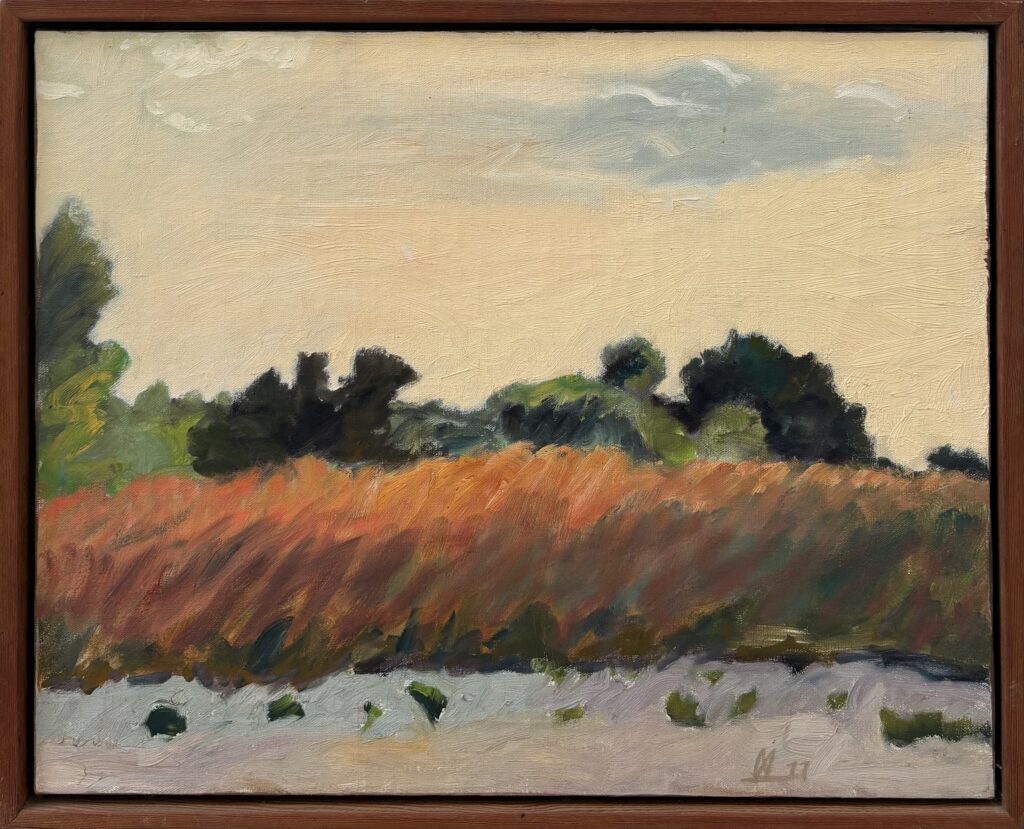
GREEN LANDSCAPE

July 24, 2026 by Kaitlin Bellune

22″ x 30″ watercolor on paper date unknown $6000

Please enable JavaScript in your browser to complete this form.
Loading

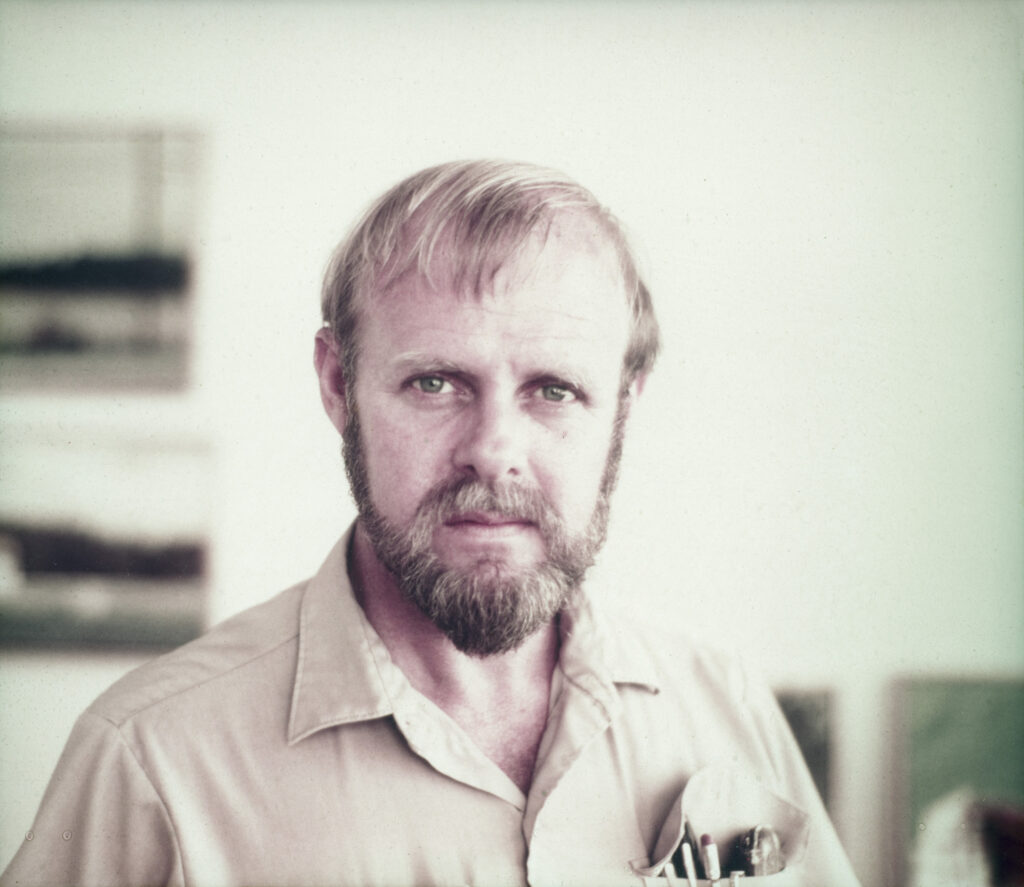
Manning Williams (1939–2012)

Manning Williams’s paintings are rooted in the history, traditions, and terrain of the South Carolina Lowcountry. A Charleston native and lifelong resident, he received his B.S. from the College of Charleston before pursuing graduate work at the Pennsylvania Academy of Fine Arts. After studying at the Academy, he returned to his hometown of Charleston. His highly personal approach to realist painting emphasized storytelling and was fueled by an interest in portraying subjects found on the periphery of the city and along the barrier islands. Williams embraced the common, the everyday, and the factual rather than picturesque beauty.

Western subjects also commanded Williams’s attention, and during the later years of his career, his concern with narrative was expressed in a more abstract style. Later in his career, Williams stated: “I consider myself a narrative painter. Yet times have changed the way we see the world. TV, movies, and the Internet pour out information faster than we could have imagined only a few years back. My work today is about finding a new way to narrate our times.”

Manning Williams’s work has been exhibited nationally and internationally, with solo shows in Charleston, New Orleans, Washington, at the University of Pennsylvania Museum of Archaeology and Art, and the Greenville Museum of Art. Group shows featuring his work included the “Second Story Show” at Piccolo Spoleto in 2002, “100 Years/100 Artists, Views From the 20th Century” at the South Carolina State Museum in 1999–2000, and “Old South, New South” at Winthrop College in 1995. In 2004, Williams and Linda Fantuzzo had a duo show at the Gibbes Museum of Art. In 2008, Williams had a solo show at the Florence Museum. Museum retrospectives were held in 2021 at the Gibbes Museum of Art and the Morris Museum.

Williams was named a 1991 Fellow by the South Carolina Arts Commission in recognition of his contributions to the visual arts in the state. His most well-known commissions were displayed at the Charleston Airport, East Cooper Hospital, and the Gaillard Auditorium. His work is included in public and corporate collections, among them the South Carolina Arts Commission, R.J. Reynolds Corporation, Citizens and Southern National Bank, Post & Courier Publishing Company, Kiawah Resort Association, Greenville County Museum, South Carolina State Museum, the Gibbes Museum of Art, and the Telfair Museum.
Filed Under: Manning Williams

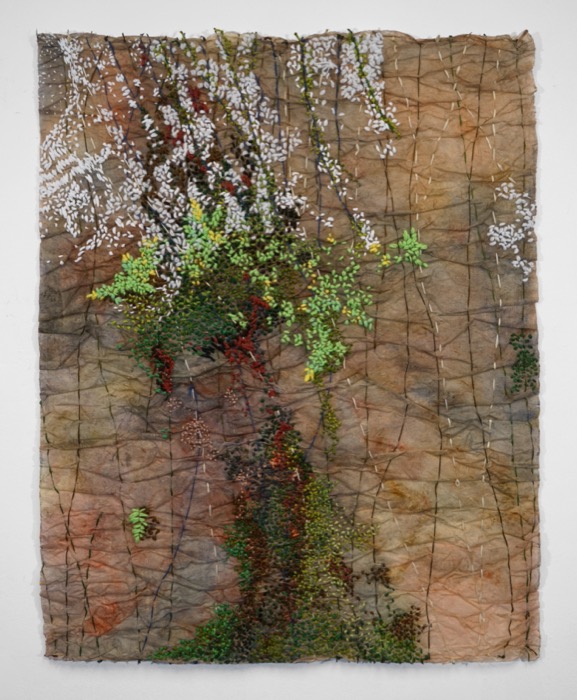
MUHLEY

June 25, 2026 by Kaitlin Bellune

30″ x 24″ painted mulberry paper, thread $5500

Please enable JavaScript in your browser to complete this form.
Loading

Artist Bio

Sherry Tseng Hill holds a Bachelor of Arts in Architecture and Art History (1980) and a Bachelor of Architecture (1982) from Rice University, Houston, Texas. After practicing architecture and raising two sons, she returned to her studio practice and completed the BLOCK Program at the Glassell School of Art, Museum of Fine Arts, Houston (2021–2023), where she now teaches.

Her work has been exhibited at The Glassell School of Art, Rice University, Fort Worth Community Arts Center, the San Antonio Art League and Museum, Discovery Green, and The Jung Center. Public collections include Rice University, Houston Endowment, and the City of Houston, for which she created a public art commission.

Working primarily in handmade paper traditions, including paper felting-based processes, fibers, thread, and found materials, Tseng Hill creates layered works shaped through processes of cutting, weaving, stitching, burial, and weathering. Her work is grounded in close observation of ecological systems and inherited craft lineages, exploring fragility, transformation, and interdependence between people, materials, and environments.

Born in Taiwan and raised in the United States from the age of fourteen, Tseng Hill’s experience of cultural transition informs her sustained attention to states of in-betweenness, uncertainty, and change. This awareness carries into her studio practice, where works are approached as evolving structures rather than fixed images.

Tseng Hill states, “Using paper, fibers, thread, and found materials, I construct layered works shaped through processes of cutting, weaving, stitching, burial, and weathering. These works develop through exposure to environmental conditions over time, registering pressure, stain, decay, and repair as structural forces rather than surface events.

I am interested in thresholds where material systems shift—edges of water, soil, plant growth, insect life, and decomposition; zones where growth and collapse coexist. The work functions as a set of conditions rather than fixed forms, evolving through accumulation, erosion, and contact.

Rooted in close observation of ecological systems and inherited craft traditions, the practice explores fragility, transformation, and interdependence between people, materials, and environments. The works remain open systems, shaped by time as both material process and lived environment.”

Filed Under: Sherry Tseng Hill

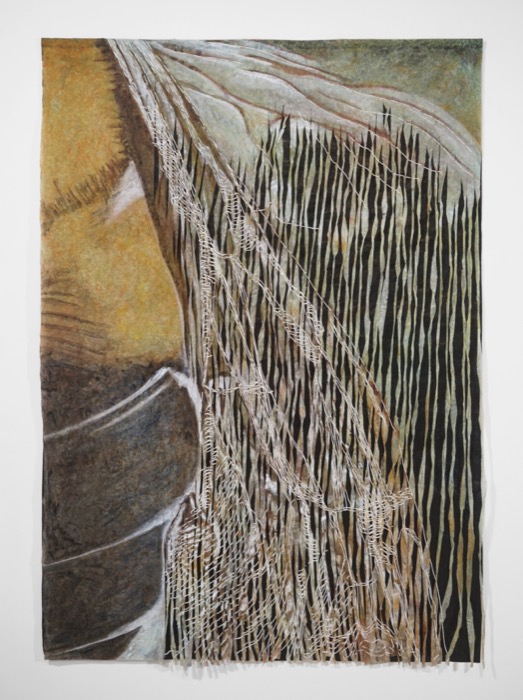
LACEWING

June 25, 2026 by Kaitlin Bellune

30″ x 24″ painted mulberry paper, palm tree bark, thread $5500

Please enable JavaScript in your browser to complete this form.
Loading

Artist Bio

Sherry Tseng Hill holds a Bachelor of Arts in Architecture and Art History (1980) and a Bachelor of Architecture (1982) from Rice University, Houston, Texas. After practicing architecture and raising two sons, she returned to her studio practice and completed the BLOCK Program at the Glassell School of Art, Museum of Fine Arts, Houston (2021–2023), where she now teaches.

Her work has been exhibited at The Glassell School of Art, Rice University, Fort Worth Community Arts Center, the San Antonio Art League and Museum, Discovery Green, and The Jung Center. Public collections include Rice University, Houston Endowment, and the City of Houston, for which she created a public art commission.

Working primarily in handmade paper traditions, including paper felting-based processes, fibers, thread, and found materials, Tseng Hill creates layered works shaped through processes of cutting, weaving, stitching, burial, and weathering. Her work is grounded in close observation of ecological systems and inherited craft lineages, exploring fragility, transformation, and interdependence between people, materials, and environments.

Born in Taiwan and raised in the United States from the age of fourteen, Tseng Hill’s experience of cultural transition informs her sustained attention to states of in-betweenness, uncertainty, and change. This awareness carries into her studio practice, where works are approached as evolving structures rather than fixed images.

Tseng Hill states, “Using paper, fibers, thread, and found materials, I construct layered works shaped through processes of cutting, weaving, stitching, burial, and weathering. These works develop through exposure to environmental conditions over time, registering pressure, stain, decay, and repair as structural forces rather than surface events.

I am interested in thresholds where material systems shift—edges of water, soil, plant growth, insect life, and decomposition; zones where growth and collapse coexist. The work functions as a set of conditions rather than fixed forms, evolving through accumulation, erosion, and contact.

Rooted in close observation of ecological systems and inherited craft traditions, the practice explores fragility, transformation, and interdependence between people, materials, and environments. The works remain open systems, shaped by time as both material process and lived environment.”

Filed Under: Sherry Tseng Hill

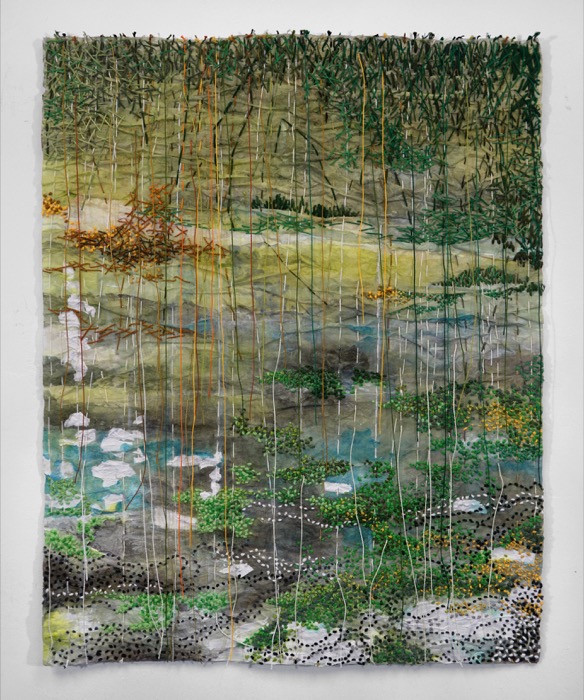
POND SCUM & ANURA OVUM

June 25, 2026 by Kaitlin Bellune

30″ x 24″ painted mulberry paper, thread $5500

Please enable JavaScript in your browser to complete this form.
Loading

Artist Bio

Sherry Tseng Hill holds a Bachelor of Arts in Architecture and Art History (1980) and a Bachelor of Architecture (1982) from Rice University, Houston, Texas. After practicing architecture and raising two sons, she returned to her studio practice and completed the BLOCK Program at the Glassell School of Art, Museum of Fine Arts, Houston (2021–2023), where she now teaches.

Her work has been exhibited at The Glassell School of Art, Rice University, Fort Worth Community Arts Center, the San Antonio Art League and Museum, Discovery Green, and The Jung Center. Public collections include Rice University, Houston Endowment, and the City of Houston, for which she created a public art commission.

Working primarily in handmade paper traditions, including paper felting-based processes, fibers, thread, and found materials, Tseng Hill creates layered works shaped through processes of cutting, weaving, stitching, burial, and weathering. Her work is grounded in close observation of ecological systems and inherited craft lineages, exploring fragility, transformation, and interdependence between people, materials, and environments.

Born in Taiwan and raised in the United States from the age of fourteen, Tseng Hill’s experience of cultural transition informs her sustained attention to states of in-betweenness, uncertainty, and change. This awareness carries into her studio practice, where works are approached as evolving structures rather than fixed images.

Tseng Hill states, “Using paper, fibers, thread, and found materials, I construct layered works shaped through processes of cutting, weaving, stitching, burial, and weathering. These works develop through exposure to environmental conditions over time, registering pressure, stain, decay, and repair as structural forces rather than surface events.

I am interested in thresholds where material systems shift—edges of water, soil, plant growth, insect life, and decomposition; zones where growth and collapse coexist. The work functions as a set of conditions rather than fixed forms, evolving through accumulation, erosion, and contact.

Rooted in close observation of ecological systems and inherited craft traditions, the practice explores fragility, transformation, and interdependence between people, materials, and environments. The works remain open systems, shaped by time as both material process and lived environment.”

Filed Under: Sherry Tseng Hill

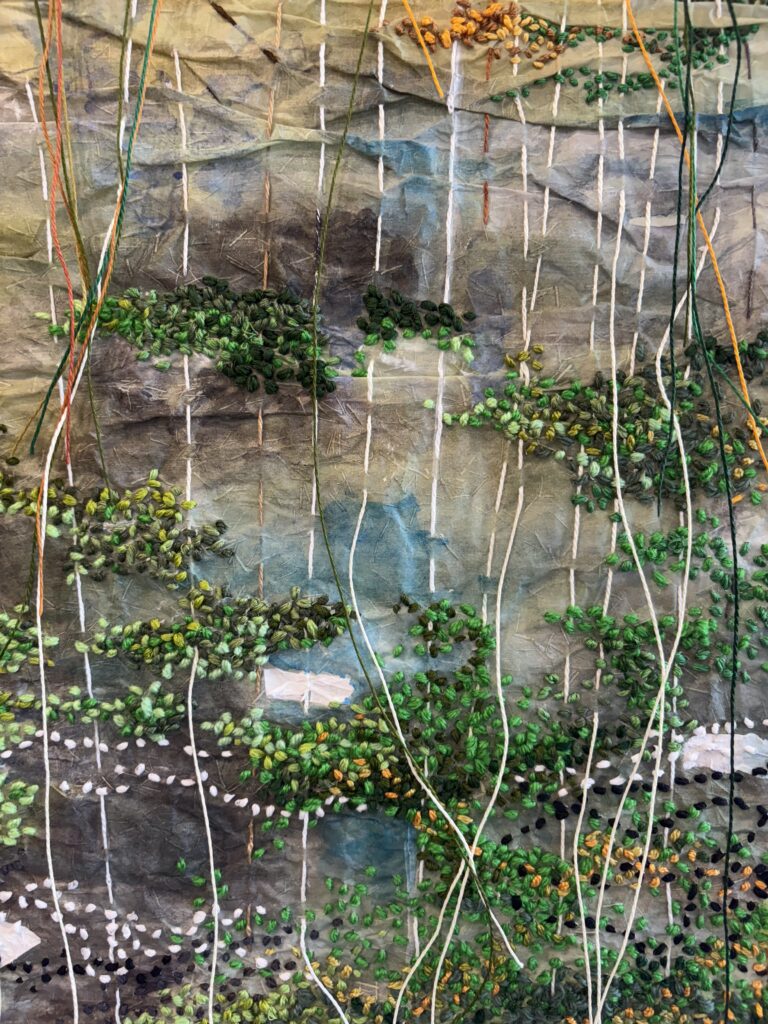
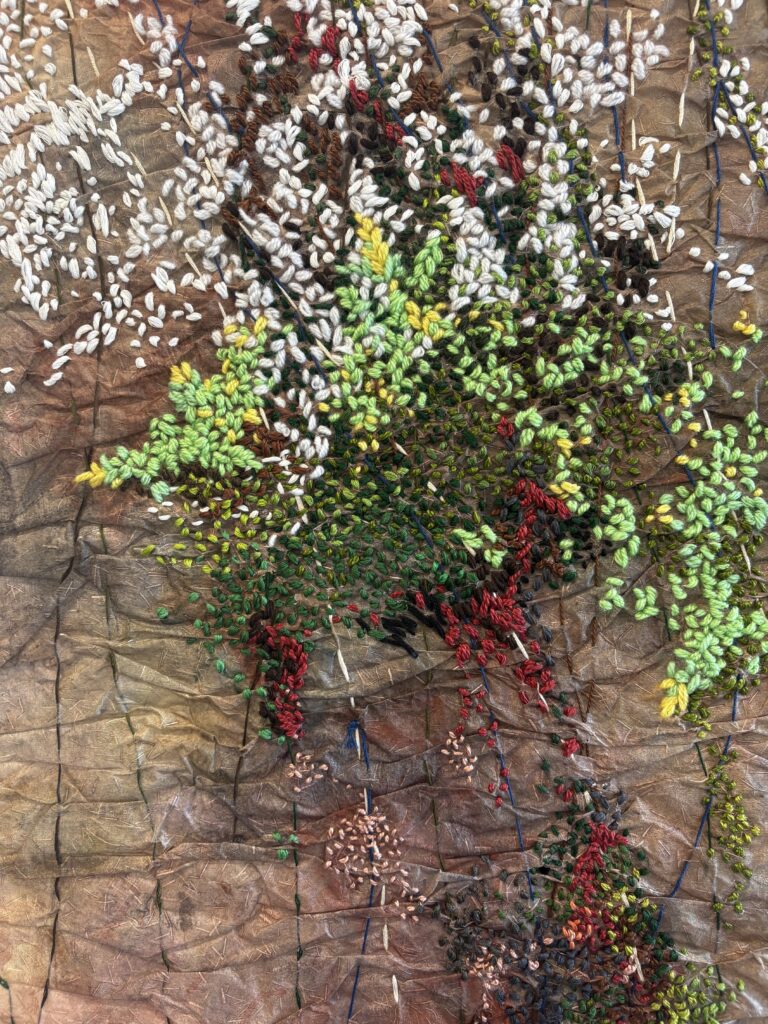
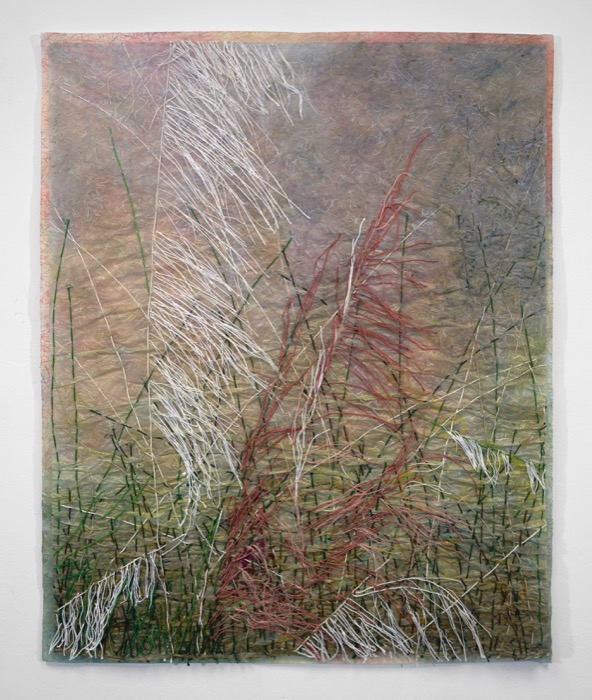
LICHEN, FERN, & MOSS

June 25, 2026 by Kaitlin Bellune

30″ x 26″ painted mulberry paper, thread, yarn $5500

Please enable JavaScript in your browser to complete this form.
Loading

Artist Bio

Sherry Tseng Hill holds a Bachelor of Arts in Architecture and Art History (1980) and a Bachelor of Architecture (1982) from Rice University, Houston, Texas. After practicing architecture and raising two sons, she returned to her studio practice and completed the BLOCK Program at the Glassell School of Art, Museum of Fine Arts, Houston (2021–2023), where she now teaches.

Her work has been exhibited at The Glassell School of Art, Rice University, Fort Worth Community Arts Center, the San Antonio Art League and Museum, Discovery Green, and The Jung Center. Public collections include Rice University, Houston Endowment, and the City of Houston, for which she created a public art commission.

Working primarily in handmade paper traditions, including paper felting-based processes, fibers, thread, and found materials, Tseng Hill creates layered works shaped through processes of cutting, weaving, stitching, burial, and weathering. Her work is grounded in close observation of ecological systems and inherited craft lineages, exploring fragility, transformation, and interdependence between people, materials, and environments.

Born in Taiwan and raised in the United States from the age of fourteen, Tseng Hill’s experience of cultural transition informs her sustained attention to states of in-betweenness, uncertainty, and change. This awareness carries into her studio practice, where works are approached as evolving structures rather than fixed images.

Tseng Hill states, “Using paper, fibers, thread, and found materials, I construct layered works shaped through processes of cutting, weaving, stitching, burial, and weathering. These works develop through exposure to environmental conditions over time, registering pressure, stain, decay, and repair as structural forces rather than surface events.

I am interested in thresholds where material systems shift—edges of water, soil, plant growth, insect life, and decomposition; zones where growth and collapse coexist. The work functions as a set of conditions rather than fixed forms, evolving through accumulation, erosion, and contact.

Rooted in close observation of ecological systems and inherited craft traditions, the practice explores fragility, transformation, and interdependence between people, materials, and environments. The works remain open systems, shaped by time as both material process and lived environment.”

Filed Under: Sherry Tseng Hill

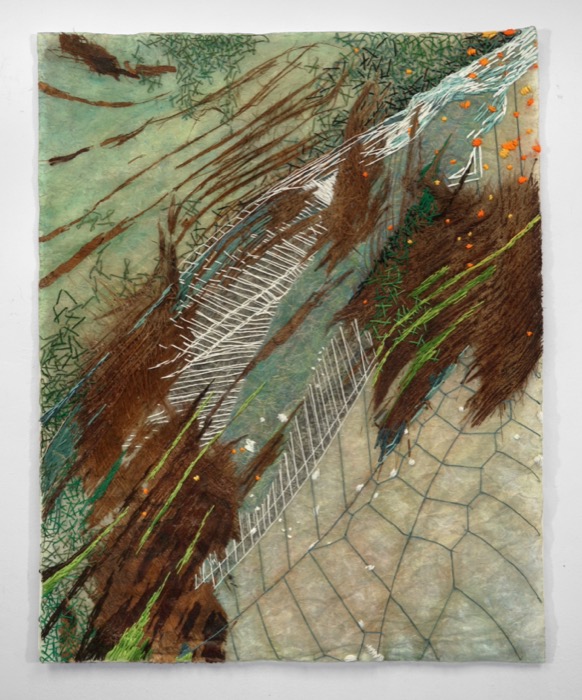
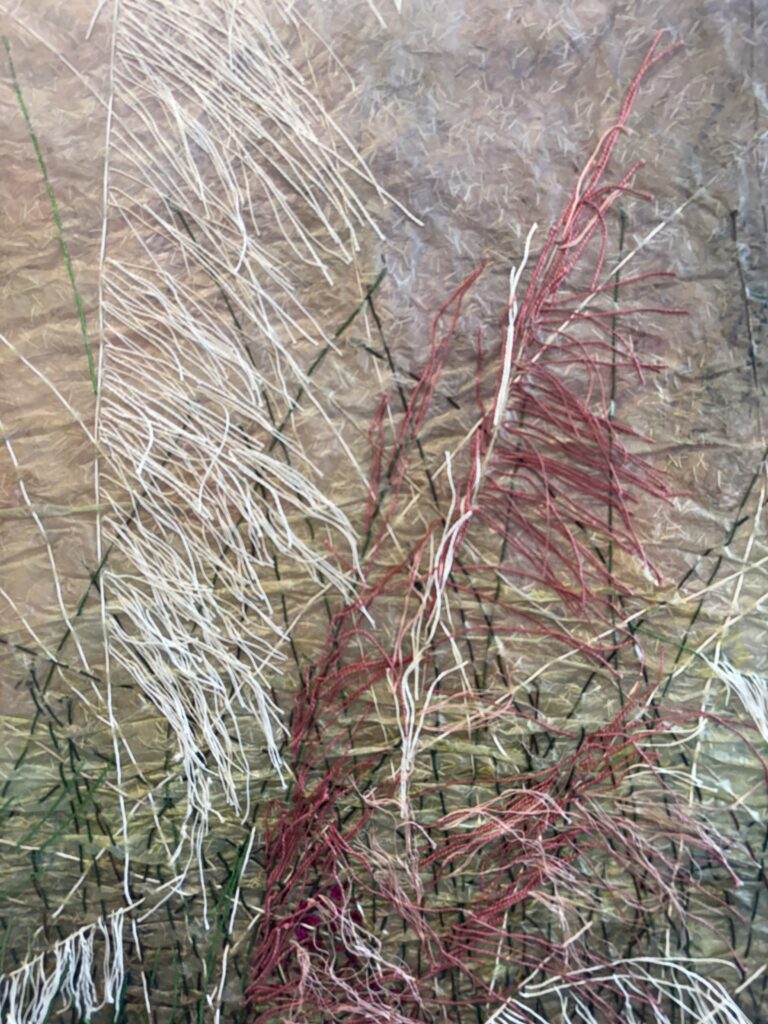
CARPENTER

June 25, 2026 by Kaitlin Bellune

54″ x 37″ painted mulberry paper, thread $9000

Please enable JavaScript in your browser to complete this form.
Loading

Artist Bio

Sherry Tseng Hill holds a Bachelor of Arts in Architecture and Art History (1980) and a Bachelor of Architecture (1982) from Rice University, Houston, Texas. After practicing architecture and raising two sons, she returned to her studio practice and completed the BLOCK Program at the Glassell School of Art, Museum of Fine Arts, Houston (2021–2023), where she now teaches.

Her work has been exhibited at The Glassell School of Art, Rice University, Fort Worth Community Arts Center, the San Antonio Art League and Museum, Discovery Green, and The Jung Center. Public collections include Rice University, Houston Endowment, and the City of Houston, for which she created a public art commission.

Working primarily in handmade paper traditions, including paper felting-based processes, fibers, thread, and found materials, Tseng Hill creates layered works shaped through processes of cutting, weaving, stitching, burial, and weathering. Her work is grounded in close observation of ecological systems and inherited craft lineages, exploring fragility, transformation, and interdependence between people, materials, and environments.

Born in Taiwan and raised in the United States from the age of fourteen, Tseng Hill’s experience of cultural transition informs her sustained attention to states of in-betweenness, uncertainty, and change. This awareness carries into her studio practice, where works are approached as evolving structures rather than fixed images.

Tseng Hill states, “Using paper, fibers, thread, and found materials, I construct layered works shaped through processes of cutting, weaving, stitching, burial, and weathering. These works develop through exposure to environmental conditions over time, registering pressure, stain, decay, and repair as structural forces rather than surface events.

I am interested in thresholds where material systems shift—edges of water, soil, plant growth, insect life, and decomposition; zones where growth and collapse coexist. The work functions as a set of conditions rather than fixed forms, evolving through accumulation, erosion, and contact.

Rooted in close observation of ecological systems and inherited craft traditions, the practice explores fragility, transformation, and interdependence between people, materials, and environments. The works remain open systems, shaped by time as both material process and lived environment.”

Filed Under: Sherry Tseng Hill

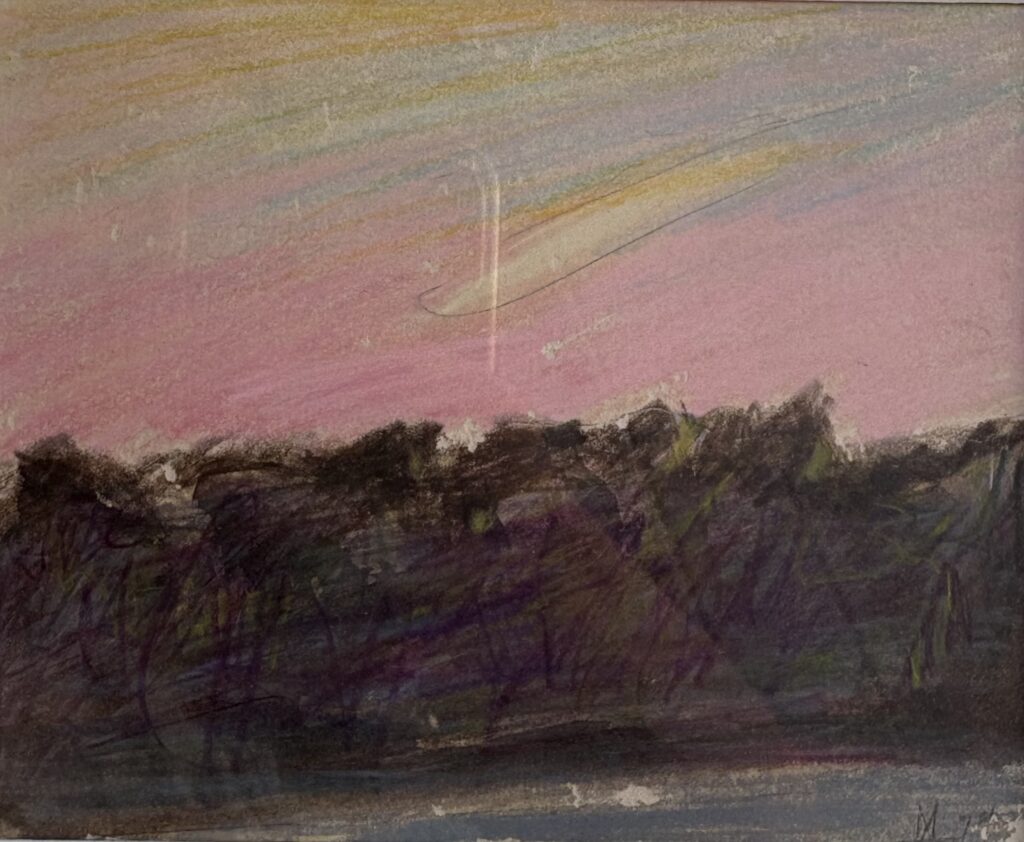
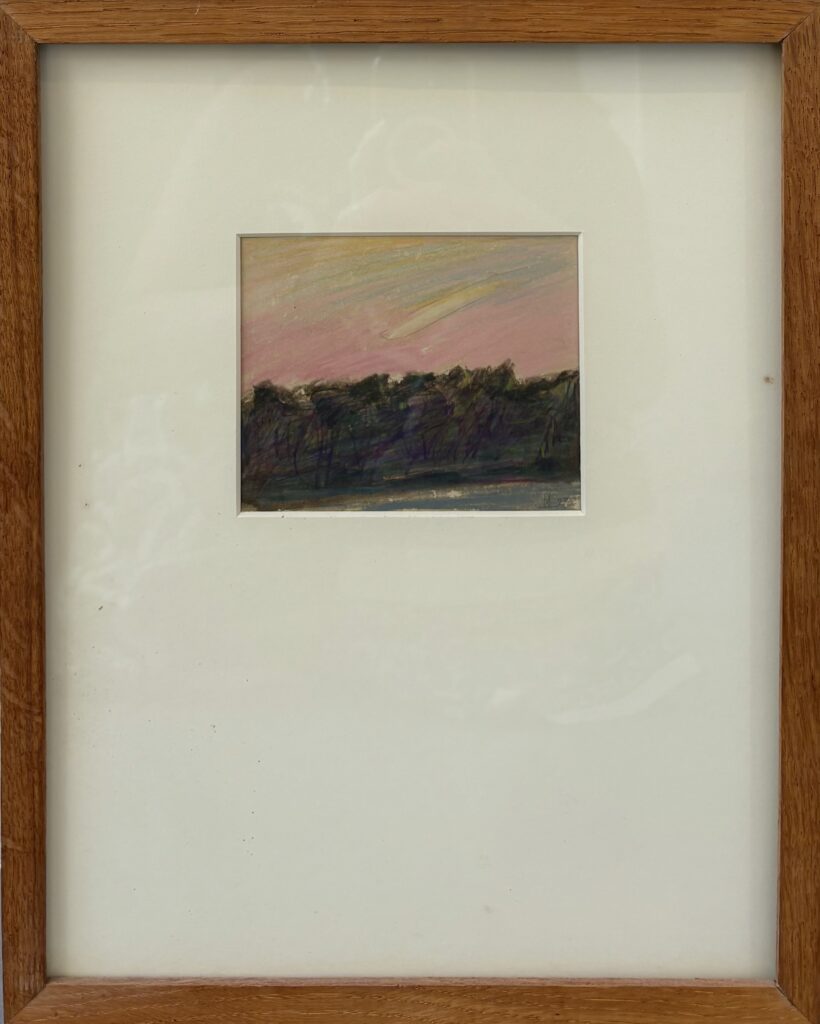
PINK SKY BEHIND TREES

June 5, 2026 by Kaitlin Bellune

4″ x 5″ paper 15″ x 12″ framed oil pastel on paper c. 1979 $1000

Please enable JavaScript in your browser to complete this form.
Loading

Manning Williams (1939–2012)

Manning Williams’s paintings are rooted in the history, traditions, and terrain of the South Carolina Lowcountry. A Charleston native and lifelong resident, he received his B.S. from the College of Charleston before pursuing graduate work at the Pennsylvania Academy of Fine Arts. After studying at the Academy, he returned to his hometown of Charleston. His highly personal approach to realist painting emphasized storytelling and was fueled by an interest in portraying subjects found on the periphery of the city and along the barrier islands. Williams embraced the common, the everyday, and the factual rather than picturesque beauty.

Western subjects also commanded Williams’s attention, and during the later years of his career, his concern with narrative was expressed in a more abstract style. Later in his career, Williams stated: “I consider myself a narrative painter. Yet times have changed the way we see the world. TV, movies, and the Internet pour out information faster than we could have imagined only a few years back. My work today is about finding a new way to narrate our times.”

Manning Williams’s work has been exhibited nationally and internationally, with solo shows in Charleston, New Orleans, Washington, at the University of Pennsylvania Museum of Archaeology and Art, and the Greenville Museum of Art. Group shows featuring his work included the “Second Story Show” at Piccolo Spoleto in 2002, “100 Years/100 Artists, Views From the 20th Century” at the South Carolina State Museum in 1999–2000, and “Old South, New South” at Winthrop College in 1995. In 2004, Williams and Linda Fantuzzo had a duo show at the Gibbes Museum of Art. In 2008, Williams had a solo show at the Florence Museum. Museum retrospectives were held in 2021 at the Gibbes Museum of Art and the Morris Museum.

Williams was named a 1991 Fellow by the South Carolina Arts Commission in recognition of his contributions to the visual arts in the state. His most well-known commissions were displayed at the Charleston Airport, East Cooper Hospital, and the Gaillard Auditorium. His work is included in public and corporate collections, among them the South Carolina Arts Commission, R.J. Reynolds Corporation, Citizens and Southern National Bank, Post & Courier Publishing Company, Kiawah Resort Association, Greenville County Museum, South Carolina State Museum, the Gibbes Museum of Art, and the Telfair Museum.
Filed Under: Manning Williams

WARM LANDSCAPE

June 5, 2026 by Kaitlin Bellune

17.5″ x 21.5″ framed oil on canvas c. 1977 $6500

Please enable JavaScript in your browser to complete this form.
Loading

Manning Williams (1939–2012)

Manning Williams’s paintings are rooted in the history, traditions, and terrain of the South Carolina Lowcountry. A Charleston native and lifelong resident, he received his B.S. from the College of Charleston before pursuing graduate work at the Pennsylvania Academy of Fine Arts. After studying at the Academy, he returned to his hometown of Charleston. His highly personal approach to realist painting emphasized storytelling and was fueled by an interest in portraying subjects found on the periphery of the city and along the barrier islands. Williams embraced the common, the everyday, and the factual rather than picturesque beauty.

Western subjects also commanded Williams’s attention, and during the later years of his career, his concern with narrative was expressed in a more abstract style. Later in his career, Williams stated: “I consider myself a narrative painter. Yet times have changed the way we see the world. TV, movies, and the Internet pour out information faster than we could have imagined only a few years back. My work today is about finding a new way to narrate our times.”

Manning Williams’s work has been exhibited nationally and internationally, with solo shows in Charleston, New Orleans, Washington, at the University of Pennsylvania Museum of Archaeology and Art, and the Greenville Museum of Art. Group shows featuring his work included the “Second Story Show” at Piccolo Spoleto in 2002, “100 Years/100 Artists, Views From the 20th Century” at the South Carolina State Museum in 1999–2000, and “Old South, New South” at Winthrop College in 1995. In 2004, Williams and Linda Fantuzzo had a duo show at the Gibbes Museum of Art. In 2008, Williams had a solo show at the Florence Museum. Museum retrospectives were held in 2021 at the Gibbes Museum of Art and the Morris Museum.

Williams was named a 1991 Fellow by the South Carolina Arts Commission in recognition of his contributions to the visual arts in the state. His most well-known commissions were displayed at the Charleston Airport, East Cooper Hospital, and the Gaillard Auditorium. His work is included in public and corporate collections, among them the South Carolina Arts Commission, R.J. Reynolds Corporation, Citizens and Southern National Bank, Post & Courier Publishing Company, Kiawah Resort Association, Greenville County Museum, South Carolina State Museum, the Gibbes Museum of Art, and the Telfair Museum.

Filed Under: Manning Williams

  • « Go to Previous Page
  • Page 1
  • Interim pages omitted …
  • Page 7
  • Page 8
  • Page 9
  • Page 10
  • Page 11
  • Interim pages omitted …
  • Page 31
  • Go to Next Page »
  • HOME
  • ARTISTS
  • CONTACT
  • WHAT’S NEW
  • Exhibitions
  • SEARCH

Copyright © 2026 · Peter Anthony Fine Art